Empire LRP and the civics of large-scale larps

Updated: Mar 25
Looking at the problem of scale in presential play through a sociological and cultural lens, taking Empire LRP as its central case study.
Index


Empire is a large-scale fantasy larp (live action role-playing) in the UK, where thousands of players gather to collectively shape a shared fictional world through politics, social interaction and storytelling. It is often used as an example of how in-person play operates at scale. Since 2013, Empire LRP has been held four times a year and has grown to include 4,500 participants and crew. In large-scale larps, play is a civic practice built on shared trust, negotiated rules, and co-created meaning. Empire provides a useful case study for understanding how in-person play scales. As the number of participants increases, systems of governance, communication and social organisation become necessary to sustain the shared world.

Live-action role-playing (larp) thrives on the closeness of small groups, where vulnerability and connection enable play to emerge. are fundamentally a social form, built on a shared imaginary, with others as a practice of intimacy, endowment, and trust. Emerging through many years of world-building and collective effort, driven by organisers, volunteers and the commitment of all players. The social aspects of larps allow for significant agency while, in turn, requiring meaningful trust and endowment from all participants and crew. The analysis connects grouping thresholds to questions of trust, authority, preparation, culture, and accessibility. It treats scaling not as a technical adjustment to rules or logistics, but as a transformative process that reshapes the very conditions of play. Scaling alters the balance among informal bonds and formal structures, as well as between individual agency and systemic authority, and between inclusivity and cohesion.
Preparation to play
Through politics, social interaction and character-driven storytelling, players shape the direction of the game. Rather than following a fixed story, the narrative emerges from the collective actions of players. The cognitive and sociological thresholds show that large groups cannot rely on spontaneous interpersonal trust. The question, then, is how players are situated within the imaginary world in ways that enable coherence at scale. Preparation becomes the first mechanism through which all larps create the conditions for trust, orientation, and participation. Preparation can range from individual to group activities that take place before the run of play; however, the preparation process can vary widely between larps, cultures and groups. Before any player can enter Empire LRP, they must undergo a series of stages as part of the process. The preparation inherently introduces the player to the imaginary, creates a personal connection to its fiction, involves understanding the rules and culture, and plays a decisive underlying role in building trust and reinforcing the make-believe.

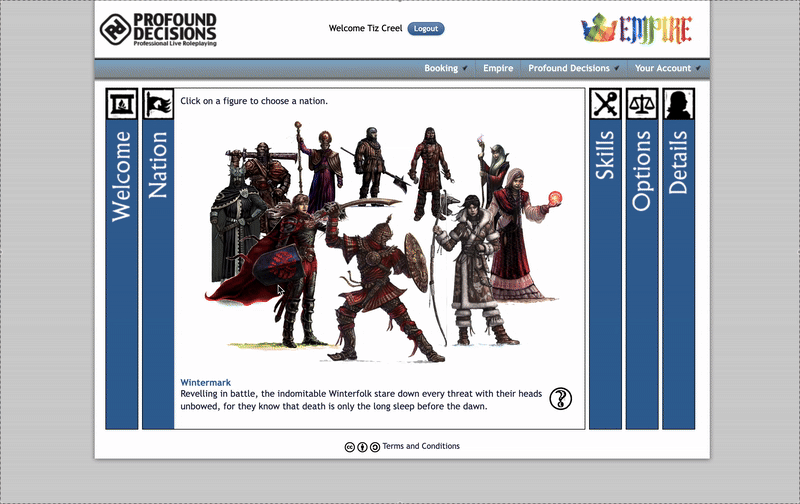
At Empire LRP, preparation begins with creating a character, giving the player a place and purpose within the imaginary world. Gary Alan Fine (1983) describes the act of putting oneself into a role as an engrossment that amplifies the self's opportunities. Sarah Lynne Bowman (2010) argues that the concept of the character begins with inspiration drawn from archetypes, game mechanics, narratives, the player’s personal needs, or a specific gap in the group composition. This character gives the player a sense of agency and a framework to act within the imaginary setting. Through the "embodiment of archetypal and metaphorical imagery, gamers experience and, thus, have the opportunity to examine essential human dramas, complexes, and emotions in a safe, low-stress environment" (Bowman 2010: 42). Bowman describes this initial stage of the character creation process as the genesis (2020: 157), defined as the origin or the inception of the character concept. As we step into others' shoes, we practice understanding others. Inherently, players practice the theory of mind while larping, utilising different cognitive, emotional, and social skills, navigating multiple states of consciousness, and gaining a deeper understanding of others' minds and experiences (Bowman 2010: 57-62).
Nations and Identity
The first step in creating a character at Empire LRP is to choose one of the ten nations, as this choice defines what players can do and explore throughout the run of play. Each nation has its own culture and customs, but is politically and legally unified. Although the characters are all fundamentally part of the same Empire, there is rivalry between nations, with players competing for the throne and pursuing personal goals or interests. Social groupings begin with the national identity the player chooses when creating a character. This selection is a fundamental organisational principle that effectively divides the player base into 10 manageable sub-communities. Each nation has unique social systems, hierarchies and traditions. Cross-national factions can pair up members from different nations based on shared beliefs, professions, or other unifying principles. However, it is more common to create relationships among people of the same nation. After choosing a nation, the new player can select skills and resources, a character archetype, and lineage; define goals and intentions; and craft a backstory, among other unique tasks that lead to further sub-groupings. Then, players must prepare costumes, props, and camping gear tailored to their character choices.


How Empire Works
Players interact with others through politics, trade, religion and conflict. Empire LRP functions like an ordinary human society and can be studied on political, cultural, and economic levels, as in the ordinary world. The political structure is modelled on a blend of feudal and bureaucratic systems: the head of the Throne is elected by the Imperial Senate, composed of representatives of each territory in the Empire's nations. Players elect Senators during events, often through in-character political processes like voting or consensus. Each nation has its own sub-groupings. For example, the nation Wintermark has three sub-groupings: the wise (Kallavesi), the bold (Steinr), and the clever (Suaq), which represent different traditions and histories within the nation. Wintermark is renowned for its resolve; the pursuit of personal heroism, particularly among the Kallavesi, is the commemoration of heroes and the honouring of the dead. It is the sacred duty of the scops (skilled poets and entertainers) to preserve the sagas and stories of notable individuals through song, poetry, and oral traditions.

While creating a character, a player can select an archetype like the scop, the territory of Kallavesa, and the tradition of Kallavesi. These choices give the new player the right conditions to take the role of recreating the deeds of the departed through the chants of the living, inspiring future generations and guiding spirits on their journey. Groupings are primarily based on the nation archetypes, serving as social niches. Archetypes are a way to identify players from their cultural roles rather than as individuals within the broader imaginary. The character creation process gives the player a place and a purpose within the imaginary world. At scale, trust functions through predictable socialisation pathways, ensuring that thousands of players can meaningfully enter and navigate the shared imaginary. The preparation ensures that thousands of participants arrive already attuned to cultural expectations, group identities, and shared meaning, easing the cultural and ritual processes that sustain the shared imaginary.
Culture at play
By the time the player arrives at the event site, they are predisposed to connect and immerse themselves in a world they already understand, seeing themselves reflected in that shared imaginary world. Rituals, shared fictions, and cultural norms take on a significant role in enabling play to emerge among strangers. Without pre-scripted narratives or automated systems, larps give players significant agency and control over shared fantasy. Everyone is their own game master or main character, actively creating the plot by participating in the story. Empire LRP is a living organism that evolves, changes, and adapts and can theoretically continue indefinitely. Large-scale larps often follow the structure of tabletop role-playing principles, where there is no fixed ending, and the larp evolves and progresses throughout continuous campaigns. Large-scale larps often emerge through many years of world-building and participation.

At Empire LRP, the most intimate formal grouping is the Bands. Players can legitimise bonds and loyalty to others by creating or joining bands (Profound Decisions, Bands). Unlike informal player groups, bands have in-game recognition and can unlock specific abilities and interactions, enabling players to combine their skills and collaborate towards common goals. To create a band, characters must undergo a magical ritual, specifically the create bond spell performed by a magician. A character can be a member of one of each type of band at one given time: banner (fighters), a coven (magic users) or a sect (priests). Players run bands as informal groups, with no mechanical structures to regulate social interactions and agreements. The band oath, which members must vow to uphold, serves as a mechanism of authority for bands. The oath is a crucial element in setting the tone and purpose of the social bond, and it is co-created by the band members. Its enforcement is primarily through the players rather than through automatic, magical, or mechanical consequences; it is part of the tradition of honouring the oath. New players are encouraged to join the online forums and groups to get advice, meet others and find connections before the run of play. However, bands are commonly formed by players at the event, in-character and organically.
Role-playing experiences draw on several foundational cultural theories and practices. In role-play, communitas is a key concept from ritual theory that helps explain the social and communal aspects of transformation. Communitas is described as a sense of community or bonding that occurs in an affinity space, where people gather around a shared interest and, ideally, can set aside aspects of the ordinary world (Bowman et al. 2024, 237), thereby creating a communal identity. Community creation has become an essential function of role-playing games, including rituals and other community-building activities (Bowman 2010). Transformative Role-playing Game Design (Bowman et al. 2024, 93-95) defines rituals in role-play as a mechanism of transformation within three main stages: 1. Preparation: the separation from the ordinary world (e.g., workshops, costuming, rules), 2. Liminal: within the run of play, a threshold to experiment with identities or situations. 3. Return: the reintegration or the return to the ordinary world (e.g., debriefing, de-roling).


Sarah Hoover et al. (2024) takes insight from the theatre and performance studies and defines five concepts that are potentially key for role-playing: liveness (unfolding in a specific time and place, unrepeatable and unique), embodiment (the lived bodily experience), presence (the immediate often-shared experience), ephemerality/transience (it cannot be fully captured or reproduced), and emergence (meanings that develop during the run of play and cannot be predicted). Role-playing activities inherently build an overall sense of community and connection among participants, a fundamental requirement for play to emerge. Adding ritual activities within the larp itself and the framing around it can deepen the role-playing experience and help place players in a state of immersion, in which they are absorbed enough in the shared fiction that they act and respond as if it were real. Related to Émile Durkheim’s (1964) concept of collective effervescence, the intense feeling of collective energy experienced when people come together in a shared activity (Bowman et al. 2024, 20). This collective emotional energy helps enable a player's sense of belonging and identity within the group. In particular, the rituals that occur during the preparation or return stages are crucial mechanics in larps that explore challenging subjects or narratives (Bowman et al. 2024).

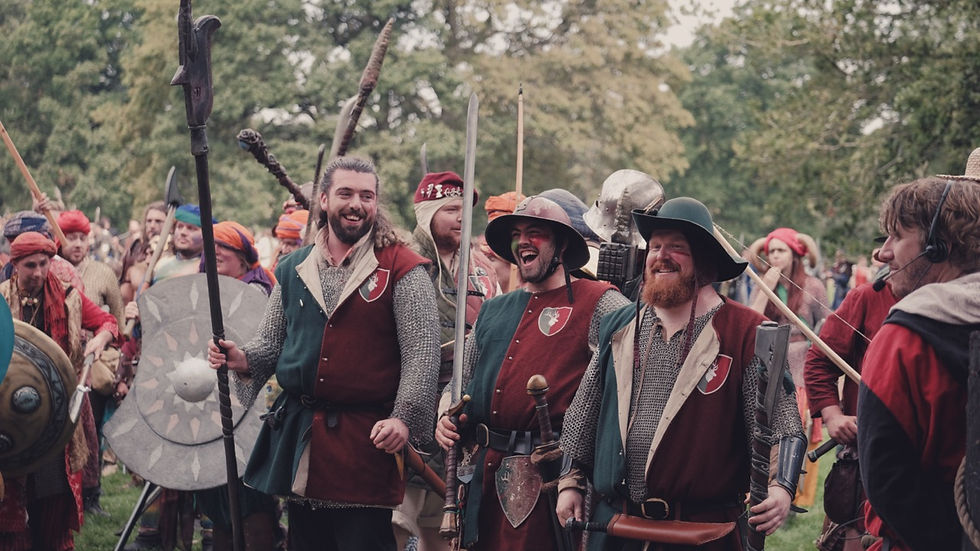
The size of Empire LRP implies that there cannot be an intimate preparation or return for players. Alternatively, there are gatherings, events, and workshops within Empire LRP that can help new players get immersed more quickly. Egregores (spirits of the nation) are non-player characters (NPCs) composed of volunteers that function as points of contact in each nation for both crew and players alike. Egregores are directed characters with a specific brief and multiple roles to fulfil during events. As part of the player support team, egregores are often considered the first point of contact for new players; they entrust players with upholding the identity of their nation and getting them involved in the plot and the nation's politics. The effects of this magical link are subtle but powerful, creating a desire in the players to uphold the traditions, cultures and customs of their nation while quickly finding opportunities to create plots. Rituals and cultural mechanisms are key aspects of creating communitas despite the absence of shared intimacy. At scale, cultural meaning-making must be paired with systems of authority that stabilise expectations and manage the boundaries of the imaginary.
Authorities of play
A new player must understand Empire's LRP context, culture, and rules. The wiki provides a comprehensive view of the Empire LRP cosmos, ensuring continuity with past and recent history, rules, mechanics, norms, and all relevant information for players and characters. The 2024 Rules Update is a comprehensive 8,960-word document that outlines changes and clarifications, ranging from removing the confusing mechanics of magic items to limitations on the use of artificial intelligence in-character (Profound Decisions, Rules Update 2024). Not all players will read through the rules, updates, and historical context, but they are expected to abide by them.

The rules, narratives and systems are the most common forms of mediations in play. The paper Power and Control in Role-Playing Games (2024) explores the multifaceted nature of power and control within role-play and defines three primary forms of authority (see Fig. 3). The rules and mechanics are described as the referential authority, which materialises from appealing to the framework and conventions of the larp. The referential authority may lead to a judgment call, in which a group of players might agree to adapt or modify the rules to fit the context or the players. Ultimately, “Referential authority has only as much power as the least invested member of the group chooses to give it” (Hammer et al. 2024: 479). In larps, rules are seen as rulings, leaving space for flexibility and improvisation; rules are suggestions or ideas to mould (Hammer et al. 2024). A significant part of the referential authority relies upon the crew (NPCs and referees), composed of volunteers selected by Profound Decisions (the organisation behind Empire LRP).

Types of Authorities
Authority | Description |
External | Mediations outside the group's control, such as laws of the physical world, legal or financial matters. |
Referential | Mediations within the play system, like game rules and narrative conventions. |
Social | Mediations are based on social agreements and norms. |
Fig. 3. Types of Authorities, overview of Hammer et al. (2024).

The crew members are players with greater authority over the narrative and the flow of play, and they possess organisational capabilities; they guard the social contract while keeping the players safe and within the formal boundaries. While authority is not assigned randomly, it is also not instantly open to everyone; players earn trust and roles over time. The decision is discretionary, meaning Profound Decisions decides who becomes a referee or an NPC, a role that carries deep trust from participants on the organising team. The cooperative nature of Empire LRP implies that a significant part of the referential authority relies on NPCs and referees, who are composed solely of players and volunteers. In larps, the community actively upholds the social contract, engaging in negotiations usually without the intervention of a higher authority. Social boundaries in role-playing games are fluid, and players are responsible for balancing their expectations and motivations with those of the group.
Politics and Governance
In-character power is not tied to mechanical progression; it is earned by contributing to the Empire and building a legacy through in-game actions, role-play, connections, and strategic involvement for a player who wants to rise to positions of significant influence or privilege. The intensity experienced in a larp depends significantly on the time invested. High-profile roles require significant player support, reputation, and alliances, which are typically built over multiple campaigns. Senator Cesare Sanguineo Rezia Di Tassato has served for 38 consecutive seasons (approximately 9.5 years). His tenure is marked by significant contributions to the Empire's infrastructure and cultural landscape, including the Blood Red River Museum, an art museum celebrating the nation of Tassato's history and culture, and the commissioning of two ministries: the Tassato Mana Exchange and the Tassato Apothecary Clearing House. It is often said at Empire LRP that players get out as much as they put in.

To reach higher roles in governance and influence, Cesare Sanguineo Rezia Di Tassato underwent a process of character evolution, building a reputation, alliances, and connections. Role-playing will always work better when the ratio of experienced players to new players is higher. For campaign-based larps, returning characters are crucial to maintaining the culture and peer regulations. When new players are introduced into any larp, experienced players help break the conventions of the ordinary world and the stigmas of play, and, most importantly, lead by example. Empire's LRP culture endures partly because experienced and veteran players make up the majority of participants in any given campaign. Experienced players maintain the culture and community norms, teaching them to new players, directly or indirectly.

Social authority is the most common type of authority in larps and is truly what drives presential playforms. Social authority is based on group agreements and norms among players. Social boundaries in role-playing games are fluid, and, in turn, players are responsible for balancing their expectations and motivations with those of the group, which demands a higher level of care, participation, and intimacy among players for the larp to work. A larp can only exist with "the participation of the community, whether active or passive, facilitates a sense of social cohesion based on shared experience" (Bowman 2010, 50). More often than not, the community actively upholds the social contract, engaging in negotiations without the intervention of a different authority.
A participant might want to manipulate the narrative for a short-term advantage, intentionally sabotage the plot, or commit social transgressions. What designers, organisers, and players can do to prevent antisocial behaviour is limited by the referential authority that inevitably needs social authority to validate the norms. Mechanical systems and peer regulation tightly control the frequency and success of antisocial behaviours, making it difficult for players to engage in such behaviours over the long term. People will likely act according to the norms because they trust others will do the same. Social regulation in larps reduces the need for formal rules to dictate behaviour during play.
A key aspect of trust is accountability, which is established through repeated interactions over time. Players are more likely to engage in antisocial behaviour (in and out of character) if the social encounter is a one-time event rather than a long-term commitment. Even if bad actors occasionally manage to disrupt the imaginary world, they will lose in the long run. Inevitably, adverse events will happen and continue to happen at larps, just as they do in ordinary social spaces. The challenge for organisers is to learn from adverse events to improve the management and prevention of harmful situations.


Larp allows us to role-play antisocial behaviour in a controlled space. In larps, players embrace roles outside their daily reality, creating an inherently vulnerable situation that can, in turn, be exploited. Larps have malleable layers of shared understandings closely related to real-life social rules and norms. Larps are even more vulnerable to transgressive play that challenges social agreements. The ambiguous normative nature of larp is a response to the ambiguity of social relations and social cohesion in the ordinary world. The social and presential nature of larp brings players together, leading them to connect deeply with others and reach states of critical (and sometimes transformative) vulnerability. When the agreement is broken, it exposes the fragility (or flexibility) in play. Transgressive play is the conflict that arises when these boundaries are tested or broken, intentionally or accidentally (Stenros 2015, Stenros & Bowman 2024).
Transgressive play can have different outcomes and tensions, ranging from minor rule disagreements or inconsistencies to deliberate antisocial behaviour, which can cause the collective make-believe to fade and for play to lose all meaning. Transgressive play is an integral (yet uncomfortable) part of the play spectrum, encompassing both the desirable (what is fun or creative) and undesirable (lying, trolling, or griefing). This duality between the desirable and undesirable is a central tension in understanding the nature of play. Transgressions, though disruptive, can become moments of transformation, in which disbelief breaks the imaginary, allowing new meanings to emerge. As disbelief can dissolve the make-believe, it is also in moments of disbelief that new truths can arise and possible futures be imagined. Players navigate nuanced social situations, assume roles, and act out scenarios beyond their ordinary reality, thereby gaining a deeper understanding of themselves and others. Players reflect on and play on the complexities, vulnerabilities, and strengths of human interactions. The moral experimentation of larp has led to a community effort to ensure safe, responsible, and thoughtful play.

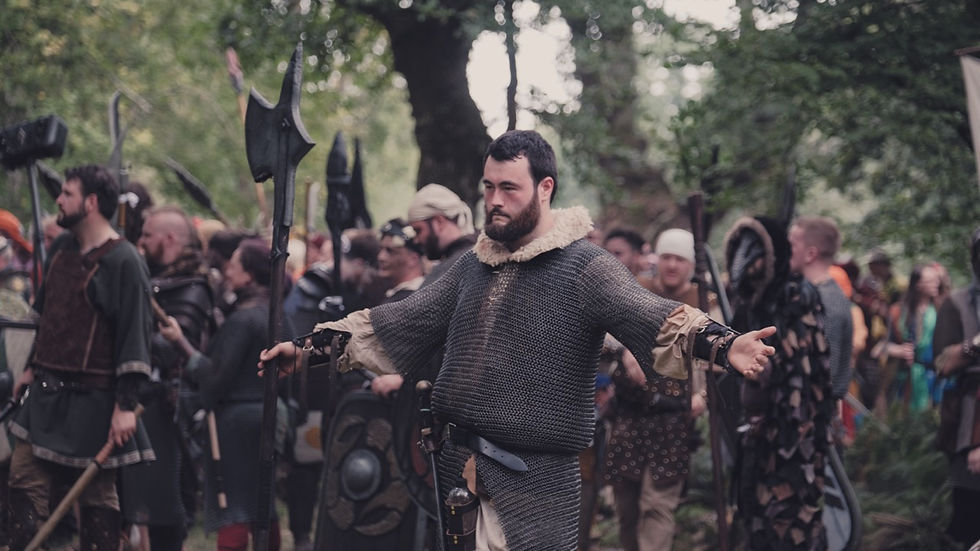
As scale increases, authority shifts from interpersonal negotiation to system-supported regulation. Empire illustrates how civic structures such as rules, norms, reputation, and peer governance stabilise play when intimacy is not always present. These layered forms of authority compensate for the erosion of interpersonal trust at scale, but they cannot prevent all breakdowns. Wherever norms are flexible and communities diverse, transgressive play and barriers to participation emerge as structural tensions.
Barriers to play
As groups grow larger, the mechanisms that sustain culture become increasingly difficult to personalise. At a small scale, new participants can be welcomed through direct guidance, informal negotiations, and immediate social feedback. At Empire’s scale, however, thousands of participants arrive with different levels of preparation, familiarity, and cultural fluency. The player base of Empire LRP represents people from diverse cultures, ages, and professions, which can sometimes lead to conflicts, disputes, alienation, and breaches of the imaginary world. Cultural discrepancies can directly or indirectly alienate a player and/or disrupt the make-believe, trust and cohesion. At scale, micro-ruptures can go unnoticed, leaving some players feeling alienated or uncertain about how to engage. This makes barriers to play a structural outcome of scale.
Like any other physical social interaction, connections with others are shaped by personality, trauma, past experiences, personal interests, biases, chemical signals, or luck. Human judgements are not necessarily just, objective or logical. Nonetheless, players share enough familiarity for Empire LRP to survive and grow organically for over a decade. Barriers to entry can range from physical location, costs, time, language, conventions, and background, among other impediments, to profiling and shaping the kinds of players who can participate in a given larp. By doing so, they also shape the foundations of the culture, influencing which norms endure and how the community reproduces itself over time.

The problem of access is not purely logistical. As Trammell (2023) argues, definitions of play rooted in pleasure, leisure, and voluntary nature can mask cultural biases that privilege certain participants and marginalise others. Large-scale larps rely heavily on regular players and volunteers to carry the culture forward, but the same reliance can make it difficult for newcomers to meet the implicit expectations. Systems that support the culture (preparation, onboarding, informal mentorship) cannot be personalised at this scale, leaving some players isolated or peripheral. Despite taking place in an imaginary world, Empire LRP is designed based on the systems and customs of the ordinary world in which it is set. Larps like Empire have too many participants and too many ways to participate, making it easy for new players to go unnoticed. It is well known in the larp community that large-scale larps are easier to navigate when a character has prior connections.
Barriers to entry can be both an aspect of social cohesion and a form of social exclusion. Efforts to broaden access may disrupt existing cultural continuity, while efforts to preserve cohesion may reinforce exclusivity and stall growth and evolution. Barriers are thus active structuring forces that determine who can meaningfully participate and how the culture evolves over time. At scale, the question is not whether barriers exist, but how they shape the community’s composition and sustainability. Empire’s longevity depends on negotiating this tension: maintaining sufficient cultural coherence for large-scale play to function while expanding access in ways that enable meaningful integration. Barriers to play reveal a central paradox of larps: the very mechanisms that enable cohesion at scale can also limit who can participate.
Understanding the dynamics across preparation, culture, authority, and barriers demonstrates that scaling presential play is not merely an operational challenge but a sociocultural transformation that changes what play is and how it functions. Empire LRP demonstrates this transformation through the preparation that functions as a trust-building mechanism; ritual and cultural practices that generate cohesion without closeness; and authority becomes distributed through rules, norms, reputations, and shared expectations.
Scaling thus shifts the balance from interpersonal relationships to systemic frameworks that regulate behaviour and maintain the shared imaginary. Placing presential play within broader sociological frameworks highlights that scaling is not about accommodating more players, but about redefining the conditions under which play remains meaningful. Expansion requires cultural innovation, including the creation of communitas, mechanisms that balance authority and flexibility, and communities that hold one another accountable. Empire LRP exemplifies both the promise and the limits of this negotiation. The persistence of transgressive play and the challenges of accessibility highlight that scaling is never a neutral or purely technical matter, but always a cultural and, at times, political conversation. As presential play grows and diversifies, grappling with its thresholds and mediations will remain central to sustaining its transformative potential as a cultural form.

A question arises about how much Empire LRP can grow without reaching a point of significant transformation, and how to shape the community's evolving composition, identity, and sustainability. The future of Empire LRP now enters a new phase. Profound Decisions has recently secured a permanent 180-acre site in the English Midlands, funded by more than £1 million raised through 2,400 community shares. Shareholders collectively own 49.9% of Unknown Worlds (the company created to administrate and develop the land), while Profound Decisions retains 50.1%. With this purchase, organisers, crew, and players inherit a blank canvas: the opportunity to shape a permanent home for Empire, complete with infrastructure, permanent buildings, vegetation, and facilities. The initial goal is to host Empire LRP four times a year. The longer-term ambition is to establish the National Live Roleplaying Centre, capable of supporting a wide range of larps, events, and conventions.
Empire LRP is an example of how enduring cultures are built not by systems alone but by the strength of human connection and a shared endowment in the imaginary world. By studying how we play together, we learn something vital about how we live together. Perhaps the larp community has rediscovered something essential about play: playfulness is best understood not by what it is or why it happens, but by how we play. Ultimately, the power of play lies in its simple yet profound capacity to believe. Larp, in this sense, becomes not only a playform but a profound exploration of human behaviour.
This is a text overview of the presentation "Playing the Part: Exploring the Civics of Empire LRP" for the symposium "Evolution of Story III: Having a Larp 2025" at Southampton Solent University.
Resources
Baird, J. et al. (2022). Liminal intimacy: Role-playing games as catalysts for interpersonal growth and relating. The Magic of Games.
Bowman, S. L. (2010). The functions of role-playing games. McFarland & Co.
Bowman, S. L. et al. (2024). Transformative role-playing game design. Uppsala University Publications.
Doyle, C. (2016). Metcalfe’s Law. Oxford University Press.
Durkheim, É. (1964). The elementary forms of religious life. George Allen & Unwin.
Dunbar, R. (2010). How many friends does one person need? Faber & Faber.
Fine, G. A. (1983). Shared fantasy: Role-playing games as social worlds. University of Chicago Press.
Hammer, J. et al. (2018). Power and control in role-playing games. In The Routledge Handbook of Role-Playing Game Studies.
Hoover, S. et al. (2024). Theater and performance studies and role-playing games. In The Routledge Handbook of Role-Playing Game Studies.
Lindenfors, P. et al. (2021). ‘Dunbar’s number’ deconstructed. Biology Letters.
Masek, L., & Stenros, J. (2021). The meaning of playfulness. Eludamos.
McCarty, C. et al. (2001). Comparing two methods for estimating network size. Human Organization.
Monge, P. R., & Contractor, N. S. (2003). Theories of communication networks. Oxford University Press.
Plato (2016). Laws. Cambridge University Press.
Stenros, J. (2015). Playfulness, play, and games. Tampere University Press.
Stenros, J., & Bowman, S. L. (2024). Transgressive role-play. In The Routledge Handbook of Role-Playing Game Studies.
Turner, V. (1969). The ritual process: Structure and anti-structure.
Trammell, A. (2023). Repairing play. MIT Press.
Uzzi, B., & Spiro, J. (2005). Collaboration and creativity: The small world problem. American Journal of Sociology.
West, B. J. et al. (2020). Relating size and functionality in human social networks. PNAS.
By Tiz Creel ©2024
Thank you for reading 🫀
Keep it playful.


