As if: the social dynamics of play (Prelude)
- Tiz Creel
- Jun 12, 2025
- 4 min read

Updated: Sep 29, 2025
This is a text overview of the poster presentation for the Transformative Play Initiative Seminar 2025: Games, Conflict, and Education. This article is part of an ongoing exploration of the social dynamics of play and how they enable space for reflection, care, and connection.
In play, objects acquire new meanings, actions are driven by mental representations, and imaginary roles are separated from ordinary reality. In an instant, a cardboard box can become a starship traversing the galaxy in search of new land; the object becomes a pivot for the emergence of play. Although people might seem free when playing, their actions are defined by rules. While this might appear paradoxical, it is the player's willingness and awareness to enter the make-believe that distinguishes play from ordinary reality. Play relies on a shared recognition of its imaginary nature, and rules create a structured freedom to explore ideas and behaviours. That is, players know they are not truly starship pilots; this awareness is what enables reflection, experimentation, and ideation.

Mediated worlds
Mediations directly and indirectly influence how we play --- they create, shape, and limit how players can express changes within play. The rules, narratives and systems are the most common forms of mediations in play; however, there are different layers of mediations, which I synthesised in four overarching categories:


Play lives in the imaginary but is bounded by the limits of the physical world. For example, if a group is role-playing as birds, gravity prevents players from actually flying. But they can agree that flapping arms signify flight, creating a new shared mediation. The ordinary and singular boundaries can be suspended (to different degrees), but never entirely. Ludwig Wittgenstein introduced the idea of language games, arguing that the meaning of words is not inherent, but defined by specific social contexts and uses. In this way, Language defines the boundaries of what we can conceive and experience. Different players sharing similar ordinary worlds can facilitate social cohesion, for instance, if all players speak the same language. The more people share a particular belief, the more established and hegemonic it becomes, sometimes becoming systematic over time, such as money, private property, or racism. The difference between the imaginary and the ordinary is in the meaning: the noun belief (an idea or principle accepted as true) and the verb believe (to accept something as true or real). To believe is to engage with uncertainty; to hold a belief is to anchor to certainty. Realities can be ambiguous, have adverse outcomes or change over time; myths are an example of a make-belief (an idea or principle accepted as true) that eventually falls into disbelief (inability or refusal to accept something as true). Nevertheless, myths survive in the make-believe through literature and other creative forms.

"The limits of my language mean the limits of my world" —Ludwig Wittgenstein (1922, 5.6)
Precential (in-person) role-play
In larps, players embrace roles and act out scenarios outside their ordinary reality, navigating nuanced social situations and discovering a deeper understanding of themselves and others.
Players reflect on and play on the complexities, vulnerabilities, and strengths of human interactions. The moral experimentation of larps has resulted in a community effort to ensure safe, responsible, and thoughtful play.
Ongoing discussions in the role-playing communities constantly redefine how we play with each other. In scenarios like:
The AIDS epidemic of the 1980s, where participants role-play on love, sexuality, illness, and death (Just a Little Lovin').


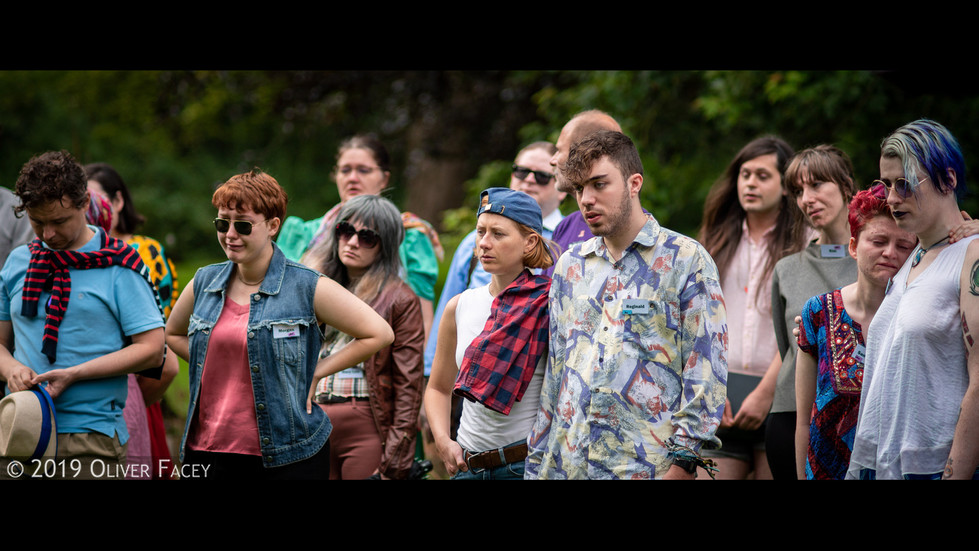


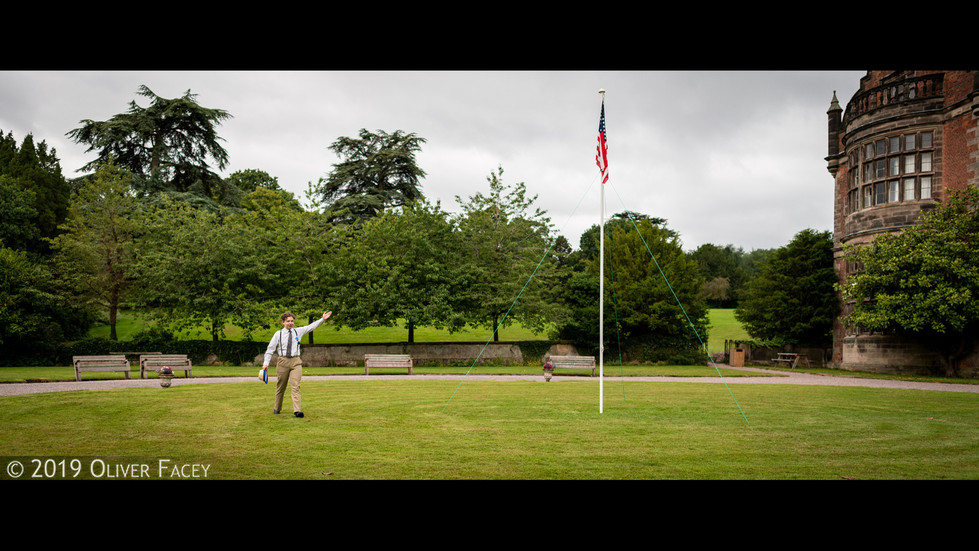


Image source: Oliver Facey (2019)
The nonverbal abstract larp about the clash of two cultures, the displaced, suddenly appearing in a strange world, and the community disrupted by the strangers' arrival (Strangers).


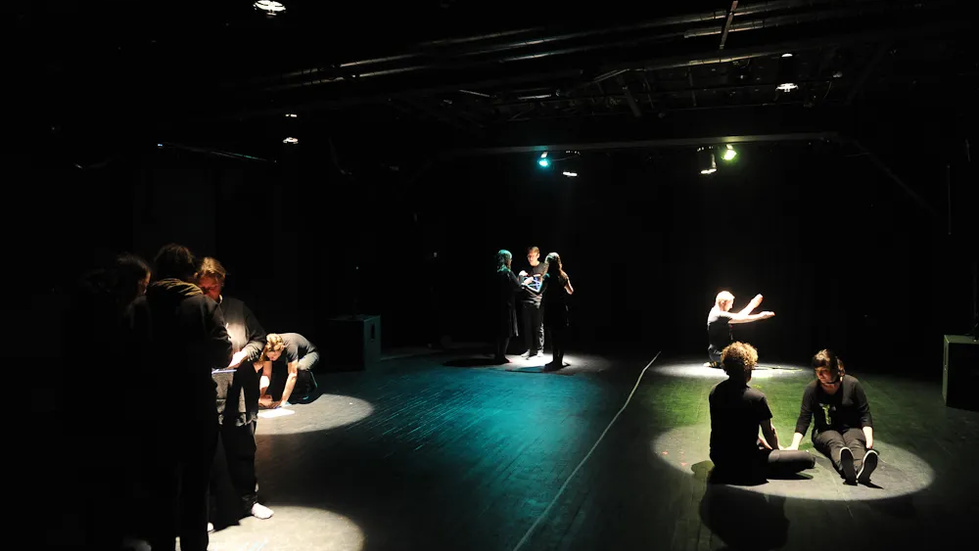


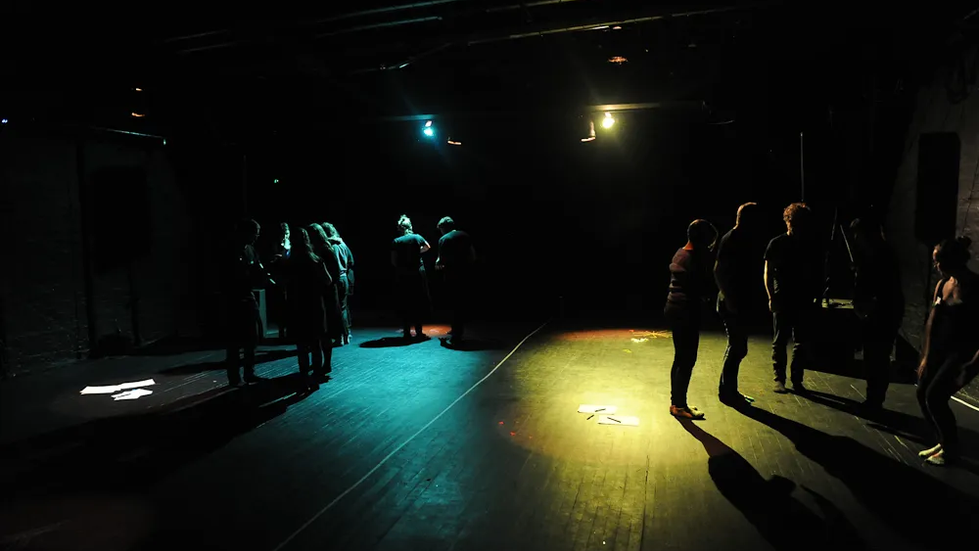


Image source: Peter Munthe-Kaas (2018)
The 1914 role-play on class roles, where ordinary activities like meals are used to structure the daily lives of the nobles, guests, and servants (Fairweather Manor).


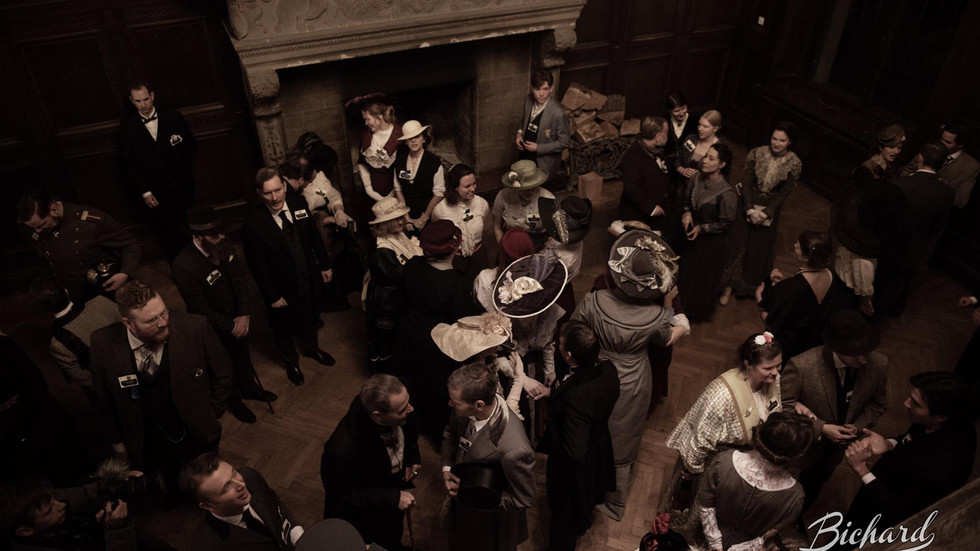






How can we fight without hurting each other? How much touch is too much touch? How do we portray a situation of abuse or dehumanisation? How can we play in cultures that are different from ours? How much touch?
Playing Transgressions
Larp has a distinctive fragility (flexibility) that emerges from its unique characteristics:

Larp allows us to role-play antisocial behaviour in a controlled space, satisfying the human curiosity for moral boundary-testing—the joy of doing what is usually forbidden.
Transgressive play is an integral (yet uncomfortable) part of the play spectrum, encompassing both the desirable (what is fun or creative) and undesirable (lying, trolling, or griefing). This duality between the desirable and undesirable is a central tension in understanding the nature of play. Players sometimes encounter moral dilemmas, challenging interpersonal dynamics, or uncomfortable situations that mirror real-life complexities, leading to natural moments of tension and social regulation. Due to this tension, the larp community has evolved to achieve high levels of care, participation, and intimacy.

When the agreement is broken, it exposes the fragility (or flexibility) of play. Transgressive play can have different outcomes; indeed, the most significant risk is the collapse of the make-believe. When the collective make-believe fades, the play loses all meaning. Tensions and conflict arise when these boundaries are tested or broken, intentionally or accidentally.


These challenges range from minor rule disagreements or inconsistencies to deliberate antisocial behaviour. Transgressions—though disruptive—can become moments of transformation, where disbelief breaks the imaginary for new meanings to emerge. As disbelief can dissolve the make-believe, it is also in the moments of disbelief that new truths can arise, and possible futures can be imagined.
The imaginary is not a temporary departure from the ordinary but a space where the meaning of reality is reconstituted; in this way, play becomes a symbolic gesture toward some underlying truth. It is by holding true to what is not true, that we gain a deeper understanding of ourselves and our relationships with others. Perhaps the larp community has rediscovered something essential yet overlooked about why we play. Playfulness is best understood not by what it is or why it happens, but by how we play. Ultimately, the power of play lies in the simple yet profound ability to believe, and as we now come to understand, larp is a profound exploration of human behaviour.
Transformative Play Initiative Seminar 2025 (June 12-13, 2025), Visby, Sweden, on the island of Gotland— Hybrid event co-funded by the Erasmus+ ROCKET project; the Uppsala Forum on Democracy, Peace and Justice; and the Department of Game Design.


Comments