Larp culture, the art of playing with others
How people create shared worlds through play, character and collaboration in live action role-play (larps).
When we larp, we discover the agency to do extraordinary things, shaping each other's stories and experiences.
What is larp (live action role-play)?
Larp (live action role-play) is a form of collaborative play in which players assume the roles of characters and navigate fictional scenarios. In larps, players embrace roles and act out scenarios outside their ordinary reality, navigating nuanced social situations and discovering a deeper understanding of themselves and others. Players reflect on and play on the complexities, vulnerabilities, and strengths of human interactions.
The social experimentation of larps has resulted in a community effort to ensure safe, responsible, and thoughtful play. Larp culture refers to the communities, practices, and values that emerge from this form of play. It is a culture built on participation, trust and collective imagination. Players sometimes grapple with ethical dilemmas, challenging interpersonal dynamics, and face uncomfortable situations that mirror real-life complexities. As a relatively new playform, larp has evolved into an intricate culture of care, collaboration, and trust.
Playing on Transgressions
Written and unwritten norms make larp accessible, creating a safe space for players to take risks and explore different aspects of themselves or others. Nothing stops a spoilsport (Huizinga, 1949) from abusing or breaking the rules. Like most social contracts, they are self-enforced and depend on the community to maintain them. Foul play reveals the relativity and fragility of the play, simultaneously revealing the strength and resilience of the collective make-believe.
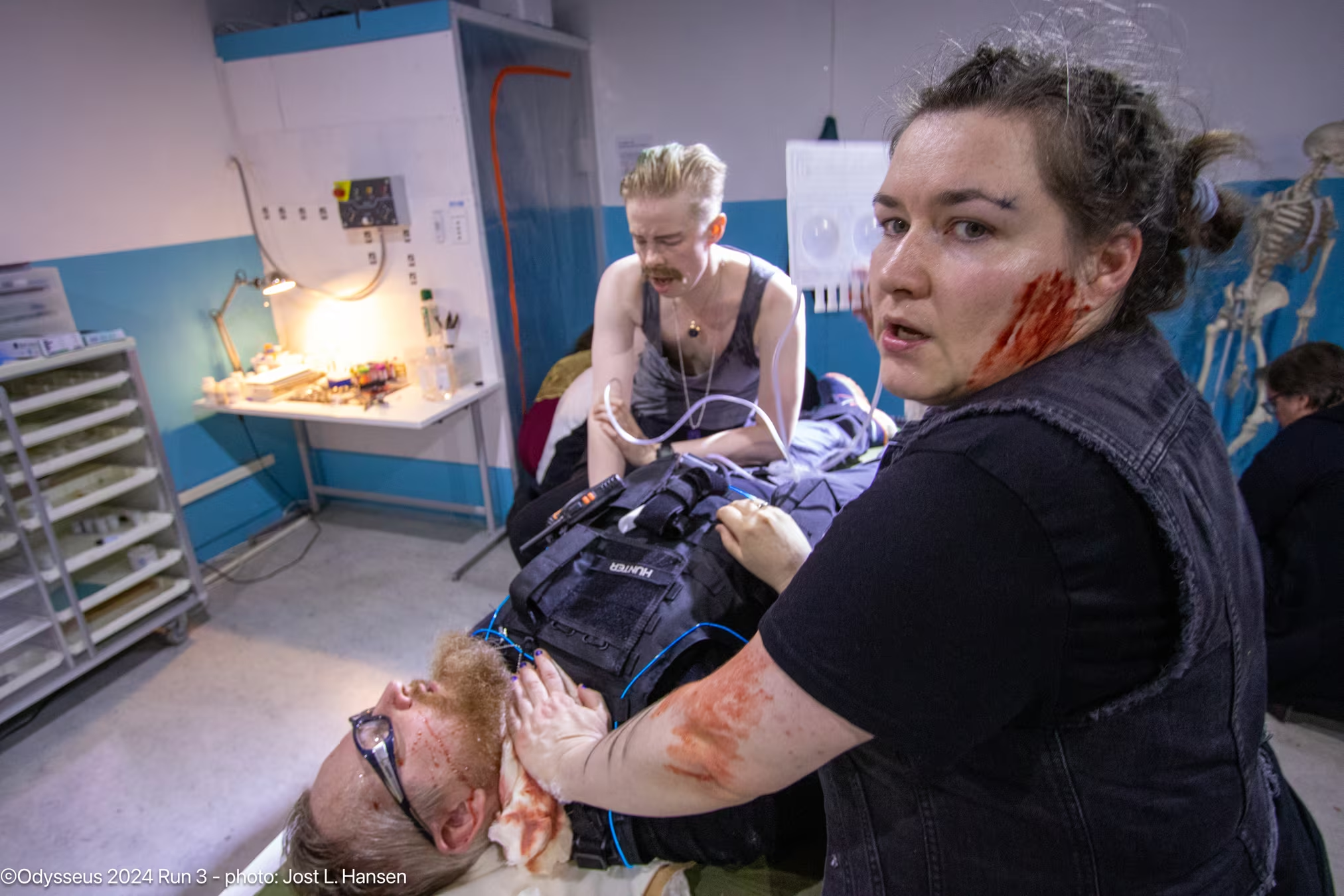


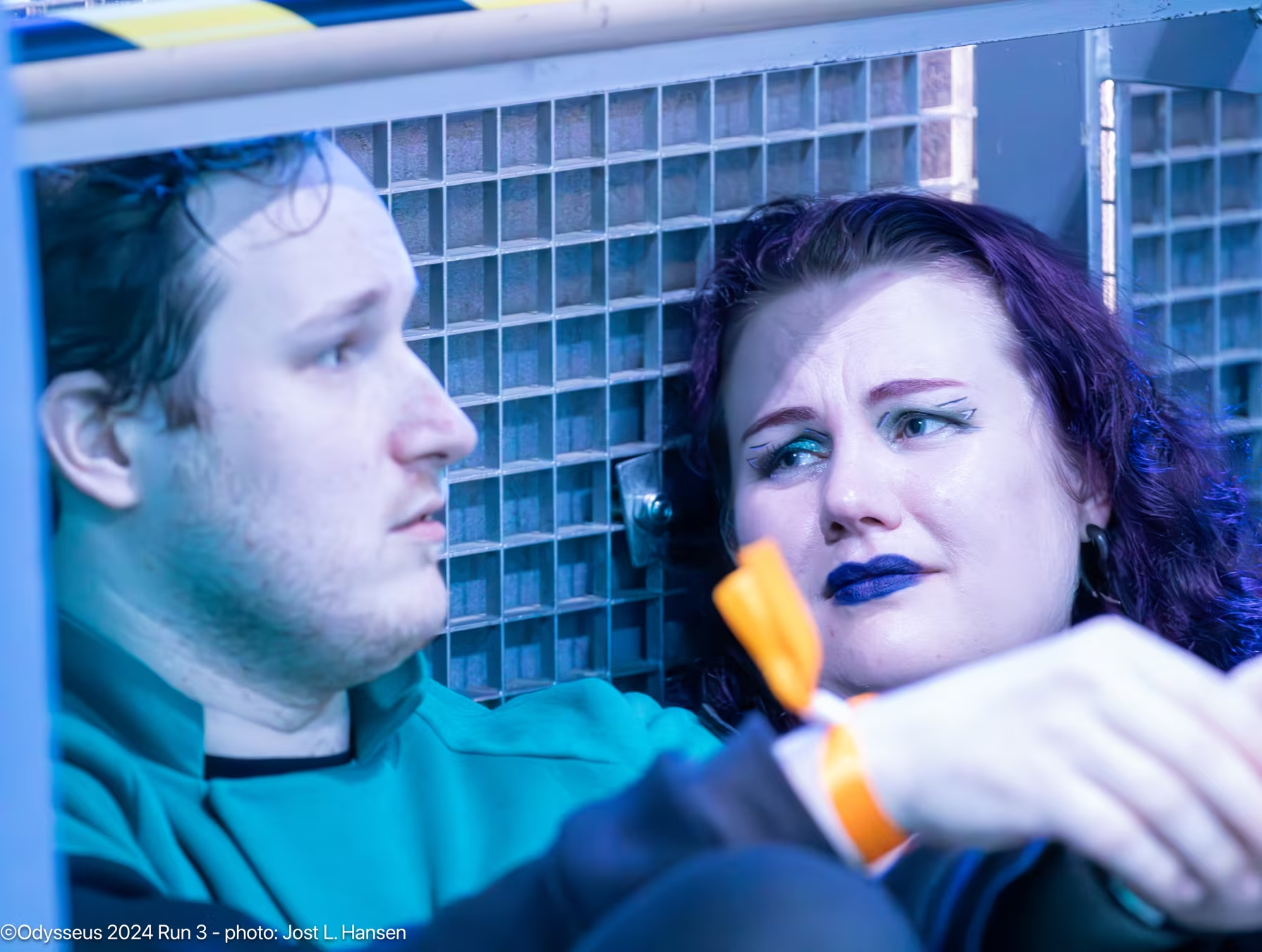


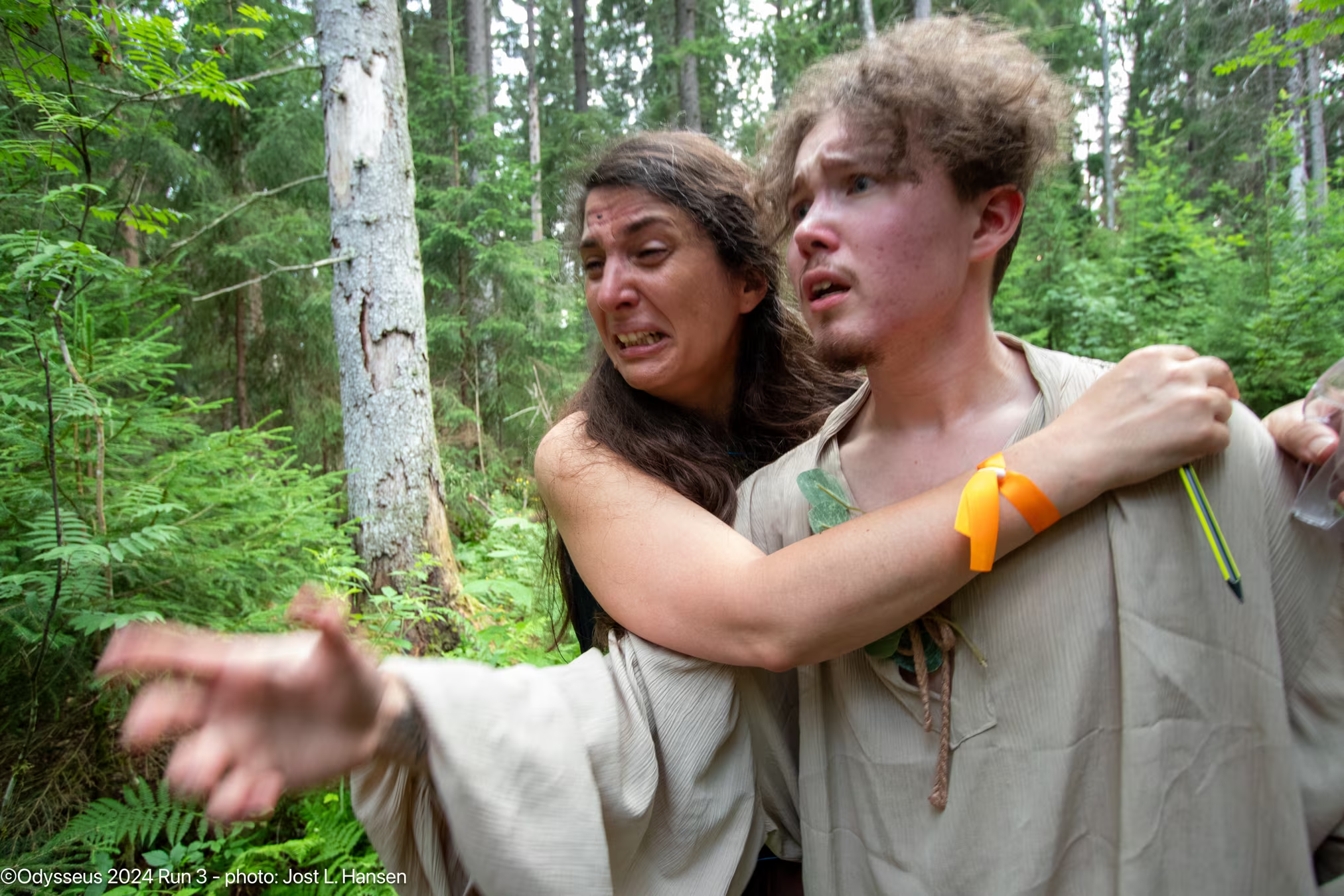

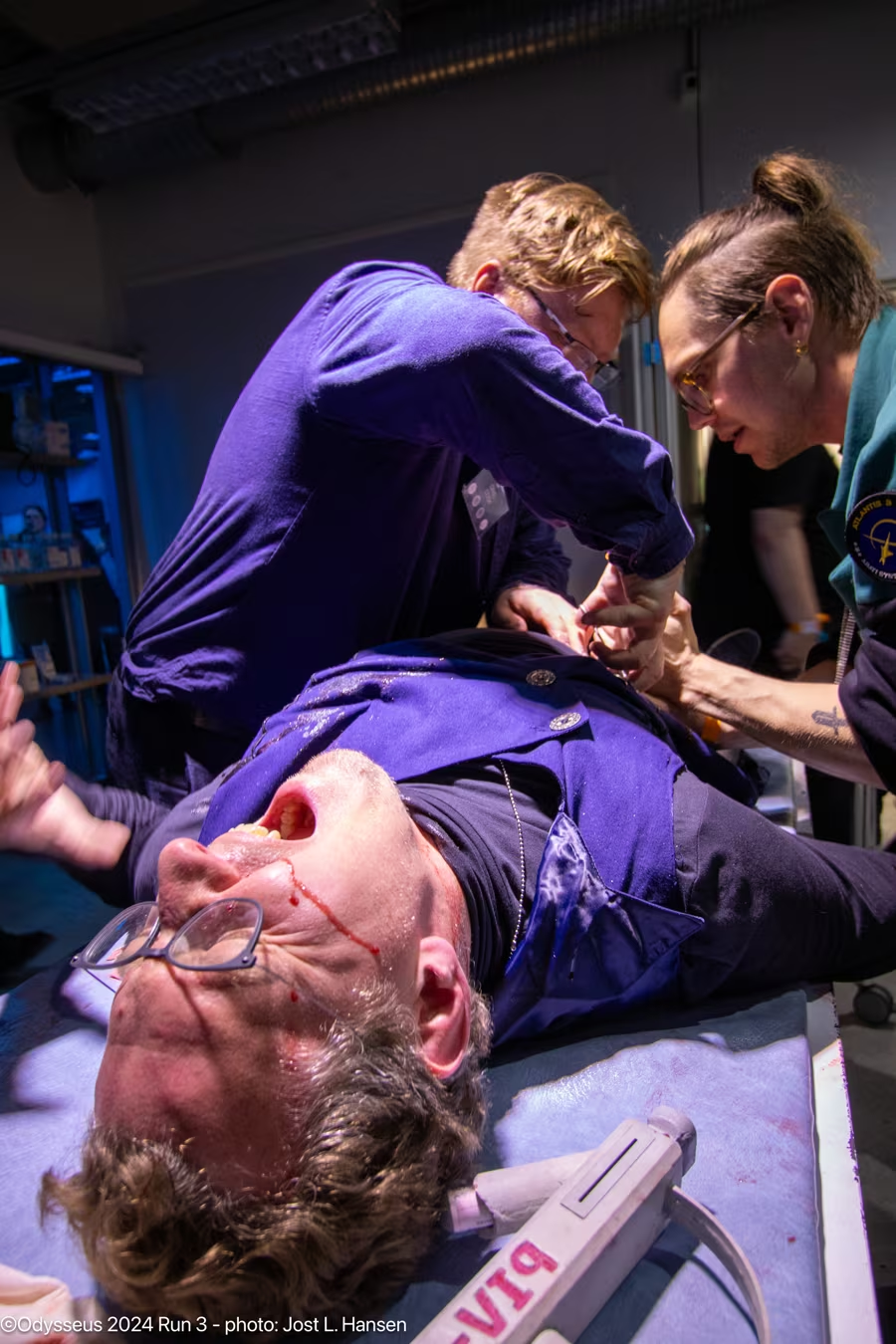
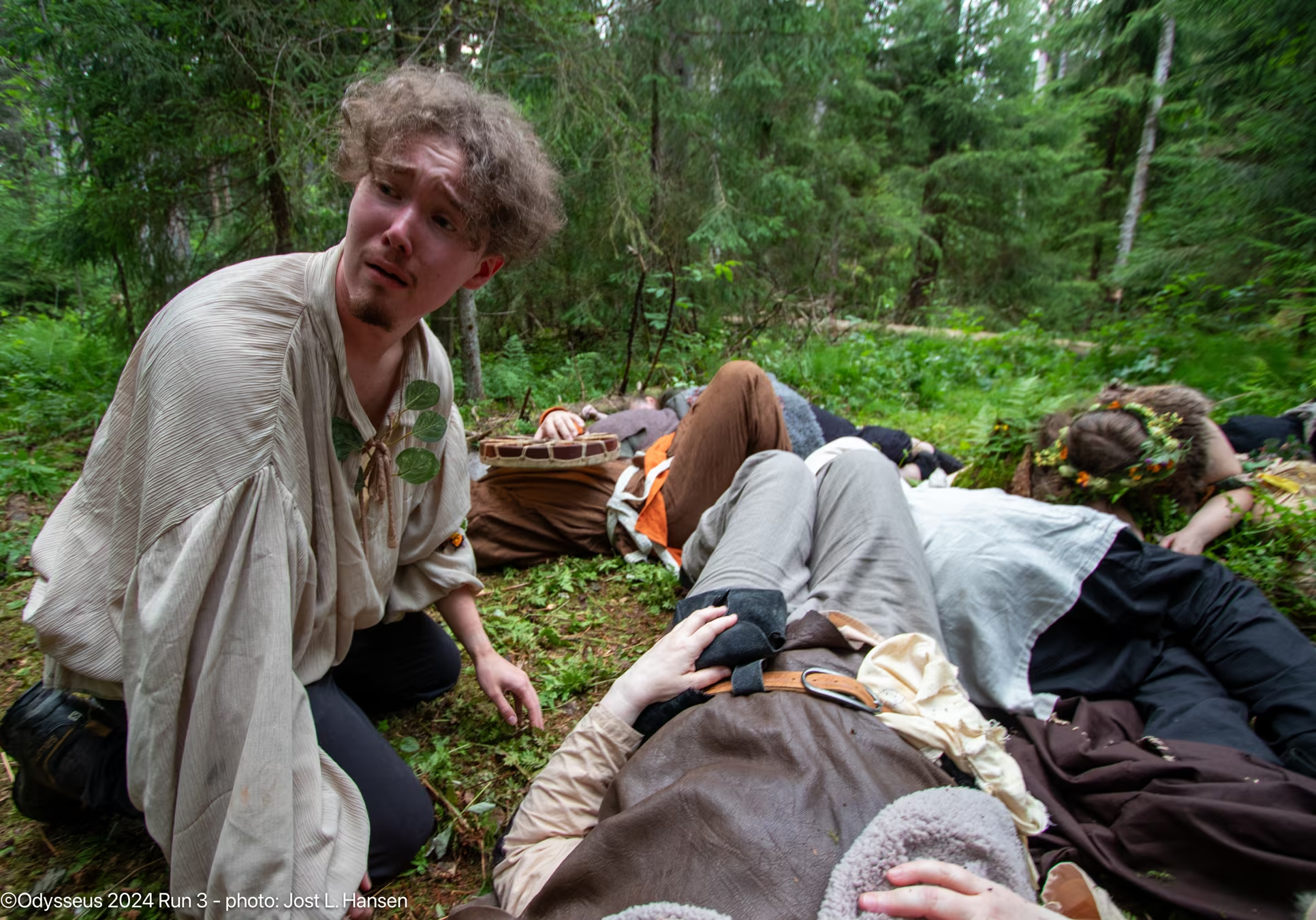





Photos by Jost L. Hansen ©
Larp culture is guided by written and unwritten norms that shape accessibility and safety, creating spaces where players can take risks and explore different aspects of themselves or others. Like most social contracts, the norms are self-enforced. However, spoilsports (Huizinga, 1949), those who disregard or abuse these agreements can expose the fragile nature of play itself. Such breaches also reveal the resilience of collective make-believe, reinforcing the community's ability to adapt and preserve the shared experience. Ongoing discussions in the role-playing communities constantly redefine how we play with each other. In scenarios like:


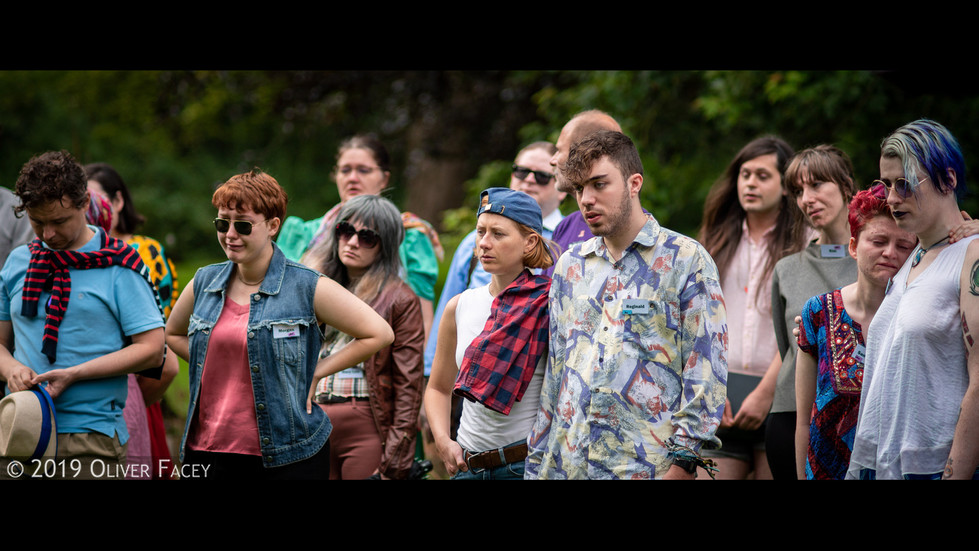


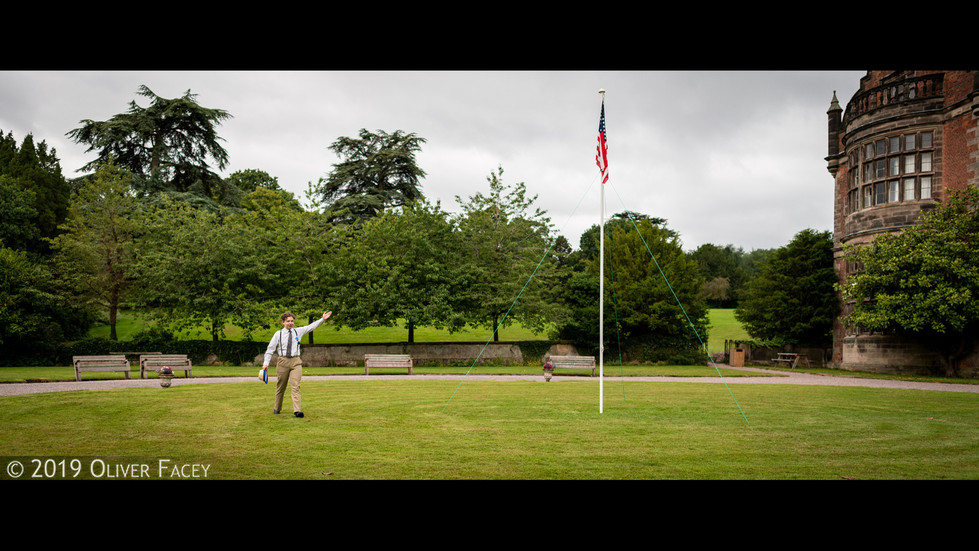


Image source: Oliver Facey (2019).
The AIDS epidemic of the 1980s, where participants role-play on love, sexuality, illness, and death (Just a Little Lovin').


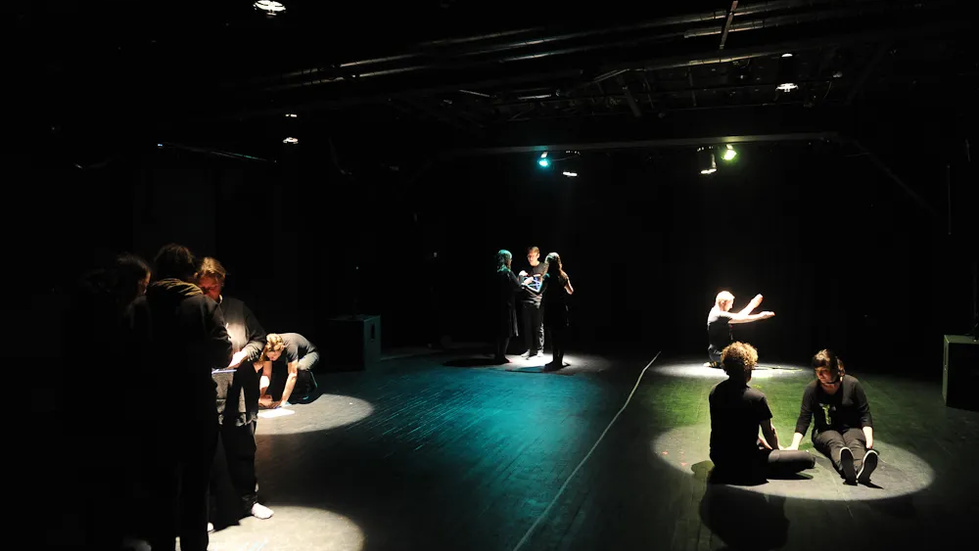


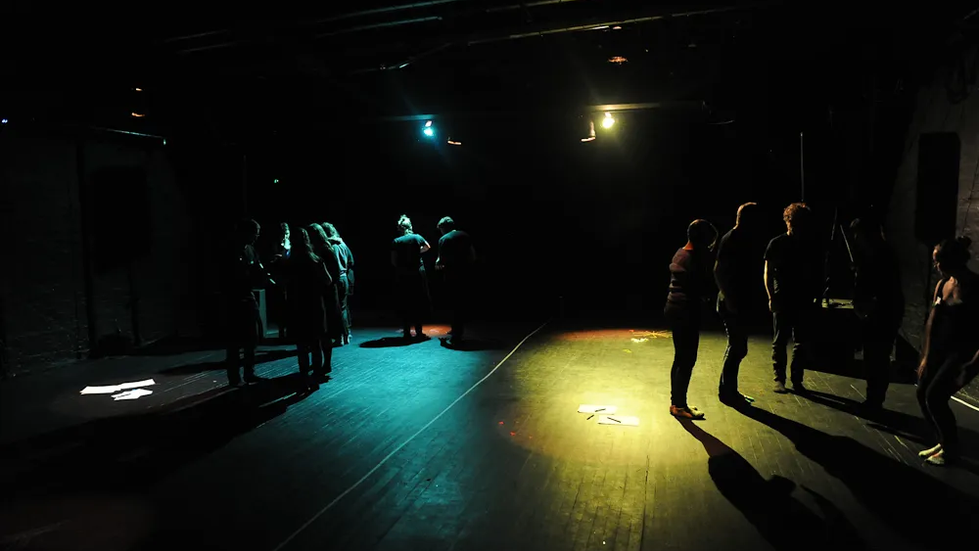


Image source: Munthe-Kaas (2018).
The nonverbal abstract larp about the clash of two cultures, the displaced, suddenly appearing in a strange world, and the community disrupted by the strangers' arrival (Strangers).


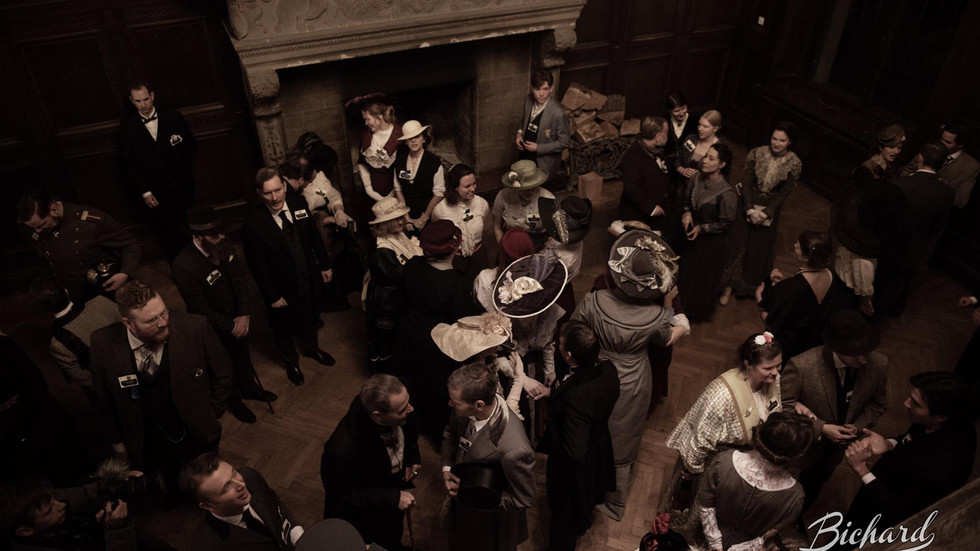






Image source: Fairweather Manor.
The 1914 role-play on class roles, where ordinary activities like meals are used to structure the daily lives of the nobles, guests, and servants (Fairweather Manor).
How can we fight without hurting each other? How much touch is too much touch? How do we portray a situation of abuse or dehumanisation? How can we play in cultures that are different from ours? How much touch? Larp has a distinctive fragility (flexibility) that emerges from its unique characteristics:

Larp allows us to role-play antisocial behaviour in a controlled space, satisfying our curiosity about moral boundary-testing or doing what is usually forbidden.
Larp Culture
Social affordances are what shape the larp culture. These affordances (rules, mechanics, spatial design, and player interactions) structure the experience, influencing how narratives unfold. Particularly when engaging with themes that can be harmful, triggering or controversial, safety measures become even more critical before, during, and after the larp. Establishing the players' understanding of the culture is even more crucial when dealing with problematic concepts or situations. Calibration helps players internalise the larp's culture and norms while balancing their perceptions, expectations, and personal boundaries in run-of-play (Nielsen, 2014). Calibration is a way to establish the player's alibi and create play opportunities.
Social affordances that serve the culture become the culture.
People seek to larp for different reasons; unlike most popular platforms, the purpose of larp is rarely to win. Personal goals are not at the expense of others but in unison with others. Players might decide to consciously or unconsciously help others by taking the focus away from themselves and placing their character or story (playing to lift), or players can embrace failure as an avenue for richer or more dramatic narratives or to give others the chance of glory (playing to lose) (Vejdemo 2018). Escalation is an approach to increasing or decreasing the intensity of play in relation to the story or other players, usually a mechanic that signals an escalation or de-escalation of play. The player can also consciously adjust or change their situation or actions by steering, an out-of-character (nondiegetic) act of influencing a character’s behaviour, decisions, or story arc to create better drama, include others, or enhance personal enjoyment.
A curated selection of Montola et al. (2015 )'s extensive list of possible reasons a layer might steer during a larp.
Description | Example | |
Physical needs | Adjusting play to meet real-world bodily needs such as food, sleep, or warmth. | Stepping out of a scene to eat or choosing a less physically demanding activity late at night. |
Physical safety | Avoiding actions that feel physically unsafe or beyond one’s comfort zone, even if others engage in them. | Declining to run during a combat scene or avoiding rough physical interaction. |
Coherence | Preserving the external coherence of the story or shared fiction, even at the expense of internal character logic. | Going along with a plot twist that doesn’t fully fit your character to maintain narrative flow. |
Game mastering and fateplay | Steering because the design requires players to push the narrative or fulfil certain roles or arcs. | Initiating conflict because the game's structure relies on escalating tension. |
Theme | Accepting or reinforcing the core premise or tone of the larp, even if it requires rapid adjustment. | Acting as if vampires are unquestionably real from one second to another. |
Boredom | Seeking engagement when play slows or becomes unstimulating. | Starting an argument or picking a fight to generate activity. |
Relevance | Moving closer to what is perceived as the central action, narrative, or meaningful play. | Leaving a side conversation to join a political debate where key decisions are happening. |
Staying in larp | Acting in ways that keep oneself within the game space or fiction rather than disengaging. | Choosing not to leave a haunted mansion setting, even when it would be logical to do so. |
Shame | Avoiding actions that feel embarrassing or socially uncomfortable, even if they fit the character. | Not performing a dramatic confession or intimate scene due to self-consciousness. |
Overcoming disabling design | Adjusting character direction to access more playable content when the design limits interaction. | Deciding your character becomes a revolutionary after realising that most players only engage with that group. |
Inclusiveness | Bringing others into play when they appear excluded or disengaged. | Inviting a lone character into a conversation or scene to give them something to play on. |
Quiet Signal (Silent Wave)
One of the most fascinating larp techniques is also the least talked about. Particularly in the International Larp culture, it is common to encounter a particular quiet signal, a non-verbal method of communication that enables large groups to quickly organise themselves in chaotic settings, demonstrating how larp culture relies on trust and shared awareness. I call it the silent wave: that moment when, in a chaotic space of hundreds of people, a person raises their hand, and in a matter of 5-10 seconds, in complete silence, everyone else raises a hand, too.
This is how it works:


Larp invites players to actively engage with intimate enactments of different realities, an evolving act that reshapes our perception of ourselves and others. When we larp, we discover the agency to do extraordinary things, not just to shape stories but to shape each other's experiences. Other players are there to lift us, just as we will do for them. Larps and larpers might not always be even or just, but more often than not, if there is care, there is trust.
Perhaps the larp community has rediscovered something essential yet overlooked about why we play. Larp culture reflects complexities, vulnerabilities, and strengths inherent in human interactions. When we embrace roles outside our daily reality, players navigate nuanced social explorations, discovering a deeper understanding of ourselves and others. As we step into another's shoes (literally or figuratively), we practice understanding different perspectives. Ultimately, larp is more than play; it is a profound exploration of human behaviour, continually reshaped through shared experiences.
Resources
Aabel, M. L. et al. (2013). Linda's birthday party. Larp Factory Book Project.
Groth, A. E. et al. (2021). Just A Little Lovin': The Larp Script. Volvemàl Grasmo.
Huizinga, J. (1949). Homo ludens: A study of the play-element in culture. Routledge & Kegan Paul.
Montola, M. et al. (2015). The art of steering: Bringing the player and the character back together. In The Knudepunkt 2015 Companion Book.
Nielsen, M. (2014). Culture calibration in pre-larp workshops. Nordic Larp.
Losilla, S. (2024). Rules, trust, and care: The Nordic larper’s risk management toolkit. Nordic Larp.
Vejdemo, S. (2018). Play to lift, not just to lose. Nordic Larp.
Baudrillard, J. (1994). Simulacra and simulation. University of Michigan Press.
Nordic Larp. (2019). Larp design glossary.
Tiz Creel of Living Things Studio ©2023
Thank you for reading 🫀
Keep it playful.